
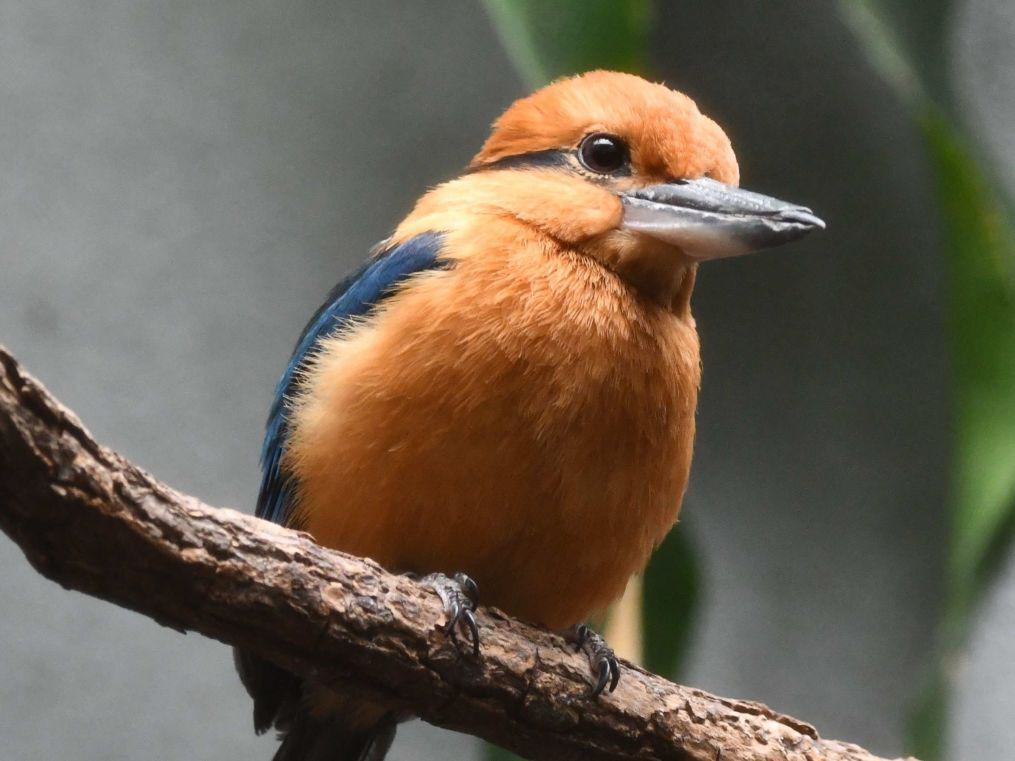
Two Guam kingfishers (Sihek) from the Saint Louis Zoo and eight other Sihek from zoos across the country have come together in an effort to save their critically endangered species.
The Sihek was declared extinct in the wild in 1988. Thirty-six years later, nine individuals were successfully reintroduced to the Pacific island of Palmyra Atoll and now represent the world's only wild Sihek population. In collaboration with the Sihek Recovery Program, up to 10 more birds could join them later this year, including the pair from our Zoo! With fewer than 150 Sihek remaining worldwide, every bird matters.
Read a full press announcement from the Sihek Recovery Program below.
New Group of Extinct-in-the-Wild Sihek Heading to Quarantine Ahead of Expected Wild Release
A new group of Sihek (also known as Guam kingfishers) will likely be headed for wild release at Palmyra Atoll later this year, nearly doubling their wild population.
This transfer will mark only the SECOND time in 40 years that new members of this cinnamon-hued species will live in the wild. They’ll soon join the first nine Sihek, who arrived on Palmyra in 2024 from a variety of institutions accredited by the Association of Zoos and Aquariums. Palmyra Atoll provides a safe haven for Sihek because it is predator free and fully protected as a Nature Conservancy Preserve and research station located within a U.S. Fish and Wildlife Service National Wildlife Refuge.
Known as Sihek by the indigenous CHamoru* people, this colorful bird once flourished on the North Pacific Island of Guam. However, the accidental introduction of the Brown Tree Snake to the island in the 1940s wiped out many native birds, bats, and lizards.
The international collaboration project known as the Sihek Recovery Program has been working behind-the-scenes with Sihek populations under human care to hatch and fledge enough genetically diverse birds to preserve the species and establish a healthy wild population.
“Palmyra Atoll provides the Sihek a safe, wild home to thrive in and establish a breeding population, with the goal of one day returning the species to Guam, once the threat from snakes is controlled. Until then, our work moves the Sihek on a path toward recovery and away from the very real risk of extinction, giving this small but mighty bird a chance to reclaim its place in the wild,” said the Sihek Recovery Program.
In anticipation of this release, ten Sihek from Association of Zoos and Aquariums accredited institutions will travel to Disney’s Animal Kingdom and quarantine in a behind-the-scenes, bio secure facility for about two months. The Sihek Recovery Program will determine which birds will make the 5,400-mile journey to Palmyra, accompanied by project team members. Excitingly, six of the ten are females, which are grossly outnumbered by 2:1 to males in the overall population. The ten Sihek are coming from the following facilities:
Brookfield Zoo Chicago
Cincinnati Zoo & Botanical Garden
Disney’s Animal Kingdom
National Aviary
Oregon Zoo
San Diego Zoo Safari Park
Sedgwick County Zoo
Saint Louis Zoo
These releases will ideally be repeated annually until 20 Sihek successfully establish as breeding pairs at Palmyra. Project members will continue to track and monitor those released, as they hopefully raise the first wild-born Sihek chicks since the 1980s. To date, several pairs have successfully created nests and laid eggs, however, the first hatch is still eluding the wild pairs.
The last wild sighting of Sihek was in 1988, and the birds are now considered Extinct in the Wild by the International Union for Conservation of Nature (IUCN). There are currently fewer than 150 Sihek left in the world.
If all goes well in quarantine, up to eight birds will be released at Palmyra, nearly doubling their wild population.