

Six-year-old female capybara Nala is the first resident of a newly renovated capybara habitat at the Saint Louis Zoo. Nala’s debut marks the return of this guest-favorite species to the Zoo for the first time in nearly two years. Nala arrived this summer from Cleveland Metroparks Zoo based on a recommendation from the Association of Zoos and Aquariums (AZA) Capybara Species Survival Plan (SSP).
The capybara habitat at River’s Edge was redesigned in preparation for Nala’s arrival, including modifications that meet evolving animal care standards and fulfill capybara’s unique enrichment and growth needs. The capybara habitat has now been expanded into one larger dynamic space that was formerly two animal habitats separated by a wide moat. The habitat features new landscaping throughout and new gates that allow Animal Care staff to provide training and enrichment opportunities right within the habitat.
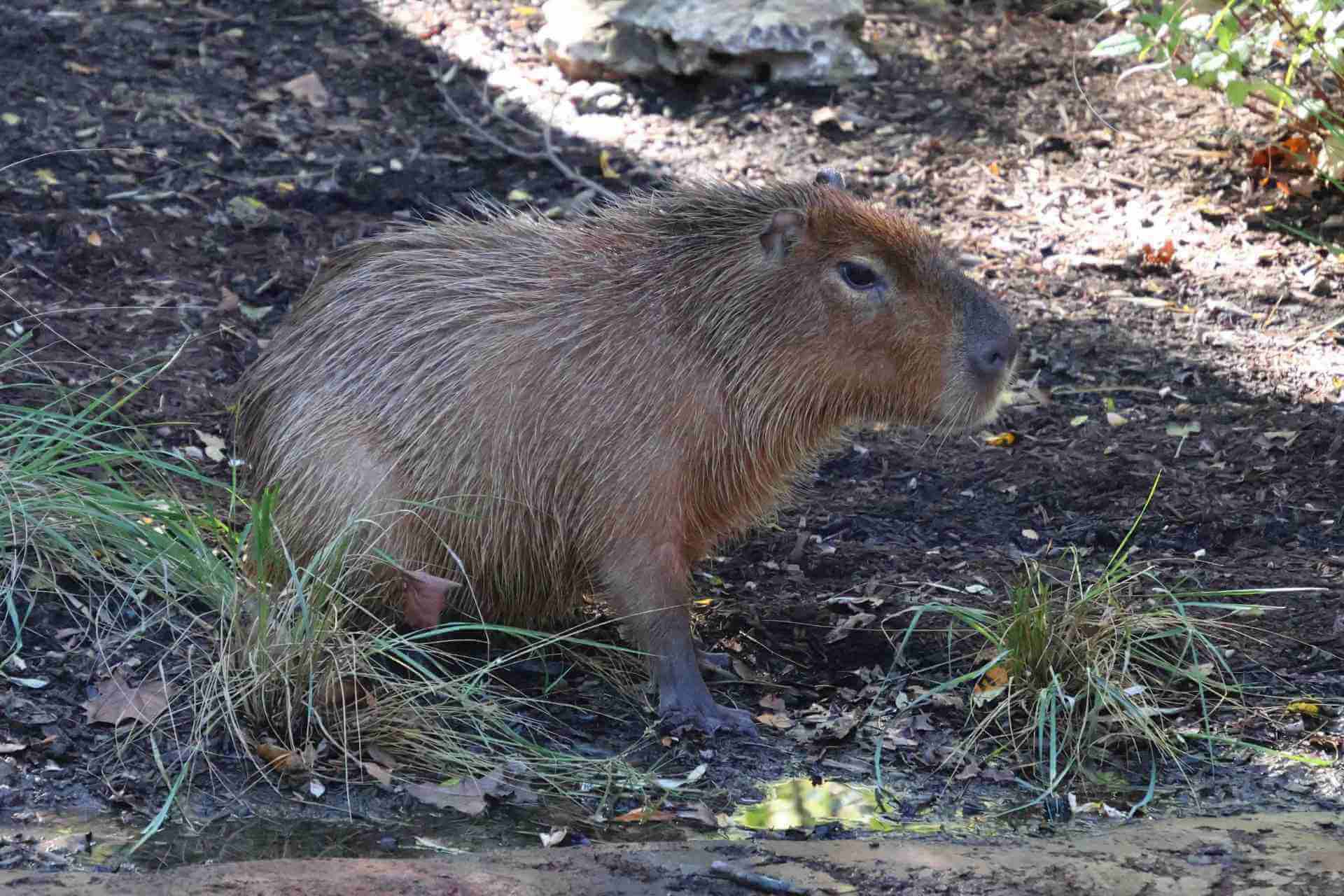
Two pools, one renovated and one brand-new, give ample space for Nala to swim, a natural behavior of the species. The newly built pool features a sloped entry to create easy access for capybara of any age. In the wild, they live near riverbanks and are excellent swimmers who can sleep underwater with their noses poking out above the waterline.
"It's so rewarding to see Nala make herself at home in this renovated habitat,” said Katie Pilgram-Kloppe, Curator of Ungulates & River's Edge. “Capybara is a favorite species for many guests, and we’re so excited for guests to meet Nala and give her a warm welcome.”
A second capybara from another AZA accredited zoo will join Nala at River's Edge later this fall, based on a recommendation from the AZA Capybara SSP.
Known for being largest rodent species in the world, capybara populations are widespread and abundant in Central and South America.